




The Complete Guide to Organic Baby Fabrics in India
Share
Walk into any baby store in India and you'll see the same words on almost every label: organic, muslin, breathable, soft-knit. But what do they actually mean — and does it matter which one you pick for your newborn? If you've ever stood in front of a shelf wondering whether that ₹399 onesie is genuinely better for your baby than a regular one, this guide is for you.
Why Fabric Choice Matters More Than You Think
A newborn's skin is up to five times thinner than an adult's, with a barrier that's still developing in the first few months of life. That means it absorbs more of whatever touches it — including dyes, synthetic fibres, and rough seams — and loses moisture faster too. Rough or synthetic fabric doesn't just feel uncomfortable to a baby; it can genuinely irritate developing skin, trap heat, and worsen conditions like eczema or heat rashes, both common in India's climate.
This is exactly why fabric is the first decision that matters more than print, colour, or price when you're shopping for a newborn.
What Does "Organic Cotton" Actually Mean?
Organic cotton is grown without synthetic pesticides or fertilisers, and it's typically processed with fewer harsh chemical treatments than conventional cotton. In practice, for parents, this usually translates to a softer hand-feel, no chemical residue against the skin, and a fabric that breathes better in humid weather.
Not every "organic" label means the same thing, though. Look for:
- Fibre content clearly stated (100% cotton vs. cotton blends)
- GSM (grams per square metre) — lower GSM (120-160) suits summer wear, higher GSM (200+) suits winter layers
- Finish — unbleached or naturally dyed fabrics are gentler than heavily processed, brightly printed ones
Muslin vs. Organic Cotton Knits: What's the Difference?
This is the question we get asked most often, and the honest answer is: they're both cotton, just woven differently.
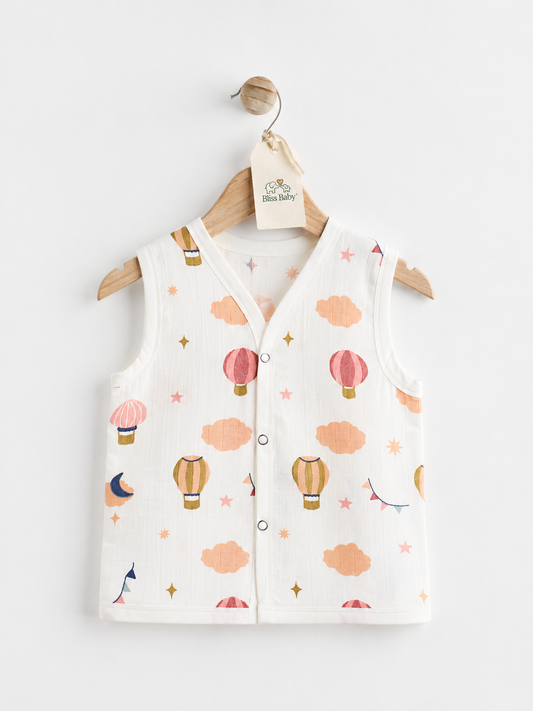
Muslin is a plain-weave, breathable fabric traditionally used in India for generations — think of the soft cotton cloth your grandmother swaddled babies in. It's lightweight, gets softer with every wash, and is naturally more open-weave, which makes it excellent for India's heat and humidity. Our muslin jabla collection and 6-layer muslin blankets use this weave for exactly that reason.
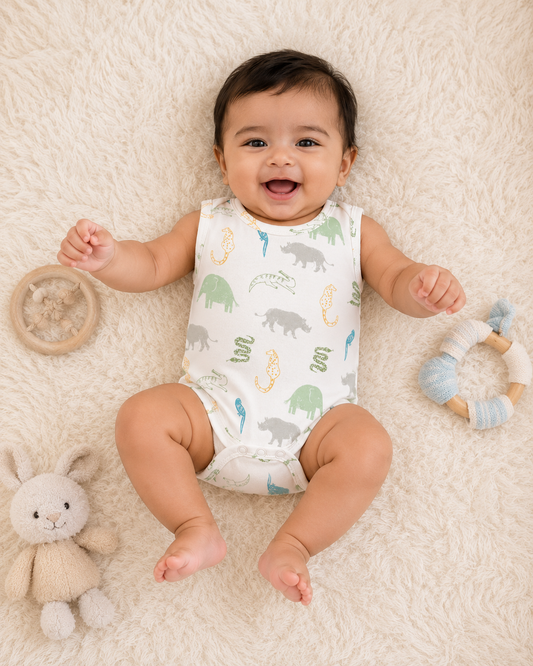
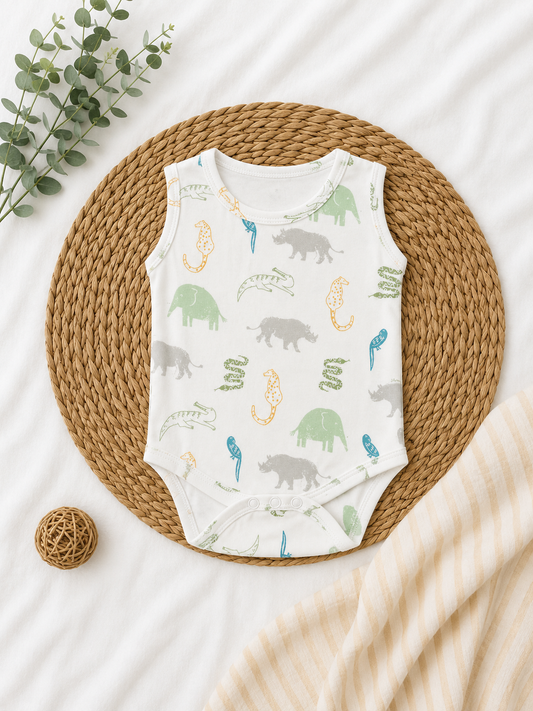
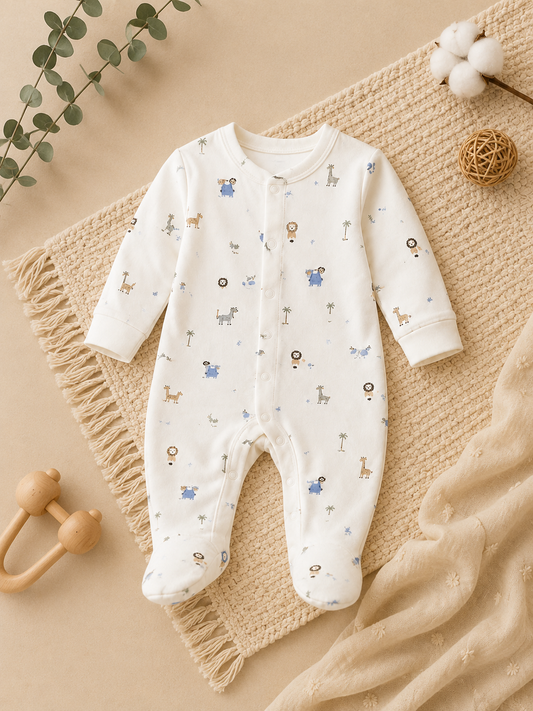
Knitted cotton (used in onesies, sleepsuits, and co-ord sets) is stretchier, holds its shape better, and gives a snugger fit — ideal for garments that need to move with a crawling or kicking baby. Our onesies and sleepsuits use soft knitted cotton for this reason.
Neither is objectively "better" — they simply serve different purposes. Many Indian parents keep both in rotation: muslin for swaddling and layering, knits for everyday wear.
Choosing Fabric by Season and Age
Newborn (0-3 months): Skin is at its most sensitive. Prioritise unbleached, low-GSM muslin for swaddling and lightweight knitted cotton for daily wear — our 0-3 Months edit is built around this.
Indian summer (March-June): Stick to muslin or lightweight cotton knits under 160 GSM. Avoid anything with a synthetic lining, even for "cute" prints — heat rash risk goes up significantly in blended fabrics.
Monsoon and mild winter: Slightly higher GSM cotton knits (as used in our cotton co-ord sets) and layered muslin work well without overheating a baby, which is a bigger risk than parents often realise.
6-12 months (crawling stage): Look for stretch-friendly knits with reinforced knees — our rompers are designed with this stage in mind.
How to Read a Baby Clothing Label
Next time you're shopping — online or in-store — check for:
- Fibre composition (100% cotton is the benchmark to look for)
- GSM, if listed, to judge weight for the season
- Seam and tag placement (flat-lock seams and printed-not-sewn tags reduce irritation)
- Wash-care instructions — genuinely organic, minimally processed cotton usually softens with washing rather than pilling or stiffening
A Simple Rule of Thumb
If you're ever unsure, this is the one rule worth remembering: for anything touching a newborn's skin directly — jablas, swaddles, sleepsuits — choose 100% cotton or muslin over blends, every time. Blends and synthetics can wait until your baby is older and less sensitive.
Explore Bliss Baby's Organic Fabric Range
Every piece in our New Arrivals is made from 100% organic cotton or muslin, sized specifically for Indian babies across 0-3 months, 3-6 months, 6-9 months, and 9-12 months. If you have questions about sizing, fabric care, or which collection suits your baby's age, our FAQ page covers the most common ones — or reach out directly at care@blissbaby.in.