



What Are Azo-Free Dyes, and Why They Matter for Baby Skin
Share
If you've read a few baby-clothing labels lately, you've probably spotted the phrase "azo-free dyes" somewhere on the tag or product page. It sounds reassuring, but most parents have never actually been told what an azo dye is, or why anyone would want to avoid it. Here's the plain-language version.
What Exactly Are Azo Dyes?
Azo dyes are a huge family of synthetic colourants, and they're genuinely everywhere — they make up roughly 60-70% of all commercial textile dyes used worldwide, prized for how vivid and long-lasting the colours are. Chemically, they're defined by a particular nitrogen-to-nitrogen bond in their structure. Most azo dyes are perfectly stable and pose no known risk.
The issue isn't the entire category — it's a specific subset.
Why Some Azo Dyes Are a Problem
Under certain conditions, a smaller group of azo dyes can break down and release compounds called aromatic amines. A number of these aromatic amines are classified as carcinogenic or otherwise harmful with repeated skin contact. This is the actual concern behind the term "azo-free" — not that all azo dyes are dangerous, but that this specific subgroup can shed compounds that shouldn't be sitting against skin, especially skin as absorbent and sensitive as a baby's.
This is exactly why regulations single out this narrow list rather than banning azo dyes altogether. The EU's REACH regulation, for example, restricts textiles from using azo dyes that release a defined list of restricted aromatic amines above a set threshold — it doesn't ban azo chemistry as a whole.
What Does "Azo-Free" Actually Mean?
When a brand says a garment is azo-free, it means the dyes used don't fall into that restricted subgroup — they won't release the aromatic amines that regulators flag as a concern, under normal wear conditions. It's a chemistry claim about the dye itself, not a claim about the fibre.
That distinction matters, because:
- A garment can be azo-free and made from synthetic fabric
- A garment can be 100% organic cotton and still be dyed with a restricted azo dye, if the manufacturer wasn't careful about dye sourcing
Fibre content and dye safety are two separate decisions a brand makes — a genuinely careful brand gets both right.
Is Azo-Free the Same as Organic?
No, and this is a common mix-up. "Organic" describes how the raw fibre was grown. "Azo-free" describes what chemistry was used to colour the finished fabric. A completely undyed, unbleached, 100% organic cotton garment is automatically azo-free (there's no dye to worry about) — but a printed or brightly coloured "organic" garment still needs its dyes checked separately.
How to Check If a Garment Is Truly Azo-Free
Without a lab report in hand, there's no way to visually tell a safe dye from a restricted one — colour and vibrancy alone don't tell you anything. Practical steps that actually help:
- Ask the brand directly whether their dyes are tested or certified azo-free, and whether they can share which lab or standard verified this
- Look for OEKO-TEX Standard 100, which specifically screens for the harmful aromatic amines that unsafe azo dyes can release
- Prefer undyed or naturally coloured basics for anything worn against a newborn's skin for long stretches — swaddles, jablas, and everyday onesies
- Be cautious of very bright, saturated prints at unusually low prices, since deep, vivid colour is one (imperfect) signal of heavier dye use, though it's not proof either way
Where Bliss Baby Stands
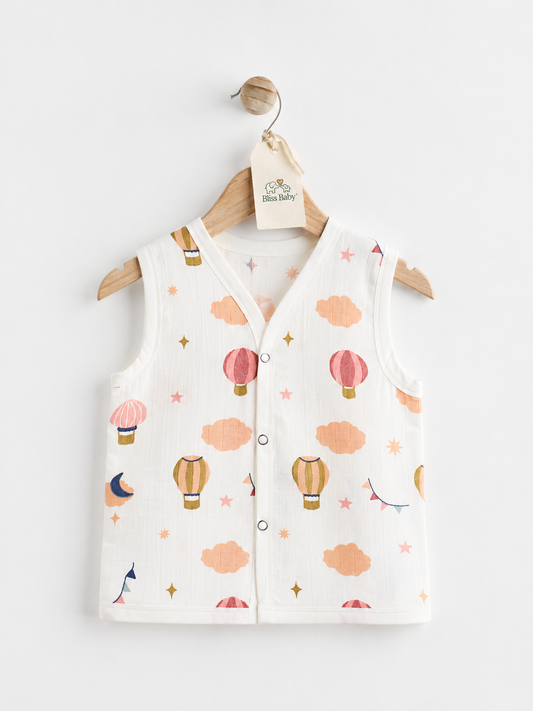
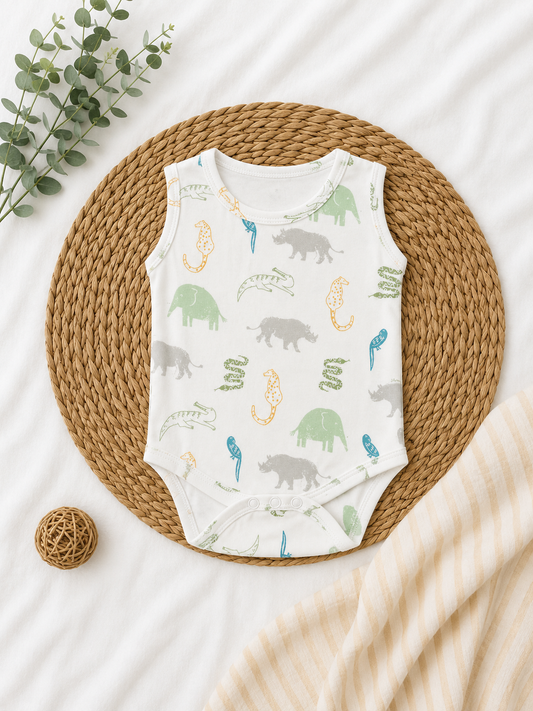
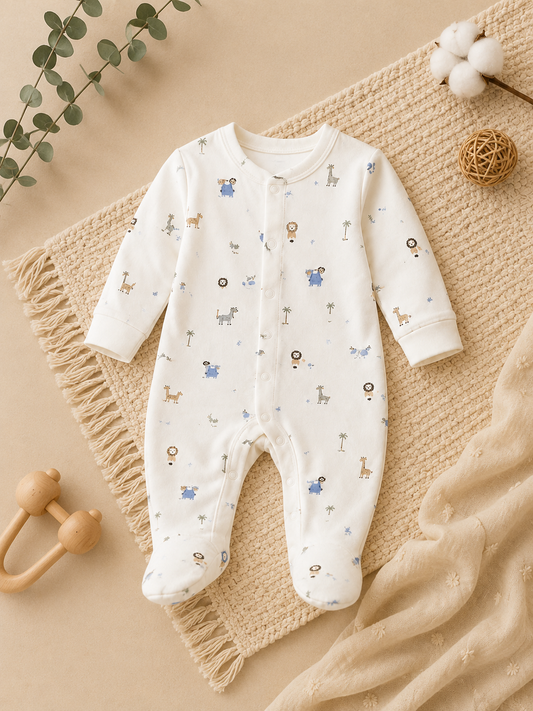
Bright prints are part of what makes baby clothes fun, and we know that. We're direct with you about where our fabric choices stand today: our garments are made from 100% cotton or muslin, and we prioritise natural, unbleached, and lightly processed fabrics wherever the design allows for it. We haven't yet pursued formal azo-free dye certification for every printed piece in our catalogue, and we'd rather tell you that plainly than let a label imply more than we can currently prove. If dye safety is a priority for you on a specific print, write to us at care@blissbaby.in before you buy — we're happy to share what we know about that particular product.
You can browse our full range across New Arrivals, including our Muslin Jablas, Onesies, Sleepsuits, and Muslin Blankets, sized from 0-3 months through 9-12 months.
The Bottom Line
"Azo-free" is a real, meaningful safety claim when it's backed by testing — it's about dye chemistry, not fibre origin, and it's worth understanding rather than skimming past. As with any label, the honest question to ask a brand isn't just "is this azo-free?" but "how do you know?"
For more on how to read fabric and safety claims, see our earlier posts on organic baby fabrics in India and GOTS vs. OEKO-TEX vs. "100% Organic." If you have questions about a specific product, our FAQ page covers common ones, or reach us directly at care@blissbaby.in.